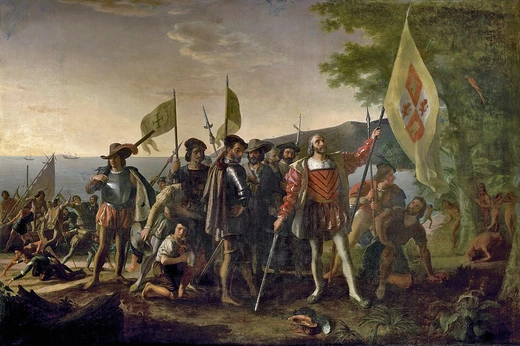
Global silver trade from the 16th to 19th centuries
Silver linked Americas, Europe, and China in early global economy.

The global silver trade between the Americas, Europe, and China from the sixteenth to nineteenth centuries was a spillover of the Columbian exchange that had a profound effect on the world economy. Many scholars consider the silver trade to mark the beginning of a genuinely global economy, with one historian noting that silver 'went round the world and made the world go round.' Although global, much of that silver ended up in the hands of the Chinese, as they accepted it as a form of currency. In addition to the global economic changes the silver trade engendered, it also put into motion a wide array of political transformations in the early modern era.
- Time period
- 16th to 19th centuries
- Primary regions
- Americas, Europe, China
- Major silver sources
- Bolivia (Potosí), Mexico
- Share of world silver from Bolivia and M
- About 80%
- Share of silver ending up in China
- 30%
- Key innovation
- Mercury amalgamation method
Lore & Background
Spaniards at the time of the Age of Discovery discovered vast amounts of silver, much of which was from the Potosí silver mines, to fuel their trade economy. Potosí's deposits were rich and Spanish American silver mines were the world's cheapest sources of it. As the Spanish need for silver increased, new innovations for more efficient extraction of silver were developed, such as the amalgamation method of using mercury to extract silver from ore. China dominated silver imports. China's huge demand for silver was caused by the failure of making paper money 'Hong Wu Tong Bao' and 'Da Ming Tong Bao Chao' and the difficulties when making copper coins. After various status changes in China history, silver played a more important role in the market and became a dominant currency in China in the 1540s. The silver flow into China passed through two cycles: the Potosí/Japan Cycle, which lasted from the 1540s to the 1640s, and the Mexican Cycle, which began in the first half of the 1700s. The market value of silver in the Ming territory was double its value elsewhere, which provided great arbitrage profit for the Europeans and Japanese.
Reader's Guide
The global silver trade from the 16th to 19th centuries is significant because it is widely regarded by scholars as marking the beginning of a genuinely global economy. The trade linked the Americas, Europe, and China in a complex network of exchange, with silver from Spanish American mines—especially Potosí—flowing to China in exchange for silk, porcelain, and other goods. This trade had profound economic and political effects: it supported the Spanish empire, acted as a linchpin of the Spanish economy, and transformed China's monetary system, where silver became the dominant currency by the 1540s. The trade also spurred technological innovations such as mercury amalgamation, which dramatically increased silver production. The scale was enormous: from 1500 to 1800, Bolivia and Mexico produced about 80% of the world's silver, with 30% eventually ending up in China. The silver trade's legacy includes the establishment of global trade networks, the rise of silver as a global currency, and the political transformations it engendered in the early modern era.
Did You Know?
- Many scholars consider the silver trade to mark the beginning of a genuinely global economy.
- From 1500 to 1800, Bolivia and Mexico produced about 80% of the world's silver, with 30% of it eventually ending up in China.
- The market value of silver in Ming territory was double its value elsewhere, providing great arbitrage profit for Europeans and Japanese.
More in Colonialism And Exploration 1-18
Spotted an error? Know more?
This is a living reference — every entry is fact-audited, and reader corrections feed straight into our audit queue. Suggest an edit · See this site's audit record