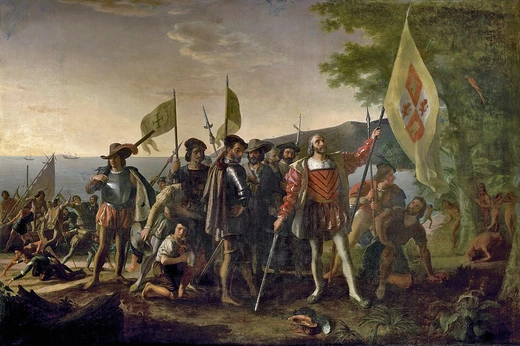
French colonization of the Americas
France built a vast American colonial empire from the 16th century onward.

France began colonizing the Americas in the 16th century, establishing a colonial empire in the Western Hemisphere that included much of eastern North America, several Caribbean islands, and parts of South America. French colonies primarily exported fish, furs, sugar, and tobacco.
- field
- Colonial history
- nationality
- French
- known_for
- Establishing colonies in North America, the Caribbean, and South America; founding cities such as Quebec, Montreal, Detroit, New Orleans, and Port-au-Prince
Lore & Background
In 1534, Jacques Cartier planted a cross on the Gaspé Peninsula, claiming the region for France. However, the permanent founding of New France is generally attributed to Samuel de Champlain, who established a settlement at Quebec in 1608. Early attempts at permanent settlements often failed due to weather, disease, or conflict with other European powers.
Reader's Guide
French colonization of the Americas was marked by extensive exploration and the founding of enduring cities, but also by persistent low population density. Despite efforts such as sending the 'King's Daughters' and declaring converted Indians as natural Frenchmen, the British population in North America outnumbered the French 20 to 1 at the start of the French and Indian War. Relations between the French and Native Americans were generally peaceful, leading to intermarriage and the emergence of the Métis people. The legacy includes a lasting French cultural and linguistic influence in Canada, the Caribbean, and parts of the United States.
Did You Know?
- The French sent approximately 800 young women, nicknamed the 'King's Daughters', to increase the population of New France.
More in Colonialism And Exploration 1-18
Spotted an error? Know more?
This is a living reference — every entry is fact-audited, and reader corrections feed straight into our audit queue. Suggest an edit · See this site's audit record