Frequently Asked Questions
The most-asked questions about colonialism and exploration.
What is colonialism in the broadest sense?
Colonialism refers to the system by which a dominant power establishes political and economic control over a foreign territory, extracting its resources and labor for the benefit of the metropole. The practice intensified from the 15th century onward and, in its formal imperial shape, largely wound down by the mid-20th century.
Which figures show up most often in introductory accounts?
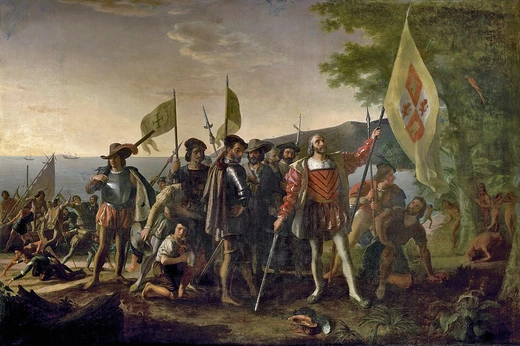
Names such as Christopher Columbus, Vasco da Gama, and Francisco Pizarro dominate older narratives, while more recent scholarship also foregrounds leaders and peoples on the colonized side, such as Tecumseh, Tipu Sultan, and the Wampanoag communities who first met English settlers.
Where should a newcomer start to get the big picture?
A good entry point is a survey of the Age of Exploration (roughly 1400–1800), which sets up the technological, economic, and religious motives before you branch into specific empires or regions.
Which European powers built the largest colonial networks?
Portugal and Spain were first out of the gate, followed by England, France, the Netherlands, and later Belgium and Germany, each carving out spheres across the Americas, Africa, Asia, and Oceania.
What was the Columbian Exchange?
It was the sweeping, two-way transfer of crops, livestock, pathogens, and human populations between the Eastern and Western Hemispheres after 1492, fundamentally reshaping agriculture, diets, and demographics on both sides of the Atlantic.
What motivated European overseas expansion?
A convergence of factors—desire for direct access to spice and gold trade routes, inter-imperial rivalry, religious zeal, and advances in cartography and shipbuilding—drove successive waves of voyages and settlement.
What were the principal human costs of the colonial era?
Enslavement, coerced labor, epidemic disease, and systematic cultural suppression inflicted catastrophic demographic and social damage on Indigenous and colonized populations across every continent touched by imperial expansion.
When did most colonies gain independence?
The concentrated wave of decolonization ran from roughly 1945 to 1975, as post-war economic strain, anti-colonial movements, and shifting international opinion eroded European imperial hold.
What is a common misconception about the era?
Popular storytelling often frames exploration as a story of empty lands being 'discovered,' ignoring that nearly every territory Europeans entered was already home to complex, thriving societies with their own governance, trade, and history.
Why does colonial history still matter today?
Borders drawn by imperial powers, trade patterns established during the colonial period, and lingering social hierarchies continue to shape geopolitics, economic inequality, and cultural identity well into the 21st century.